Vikingard
- 3.9
- Rating
- 5.00M
- Installs
- Free
- Price

 Analysis by App-foxy
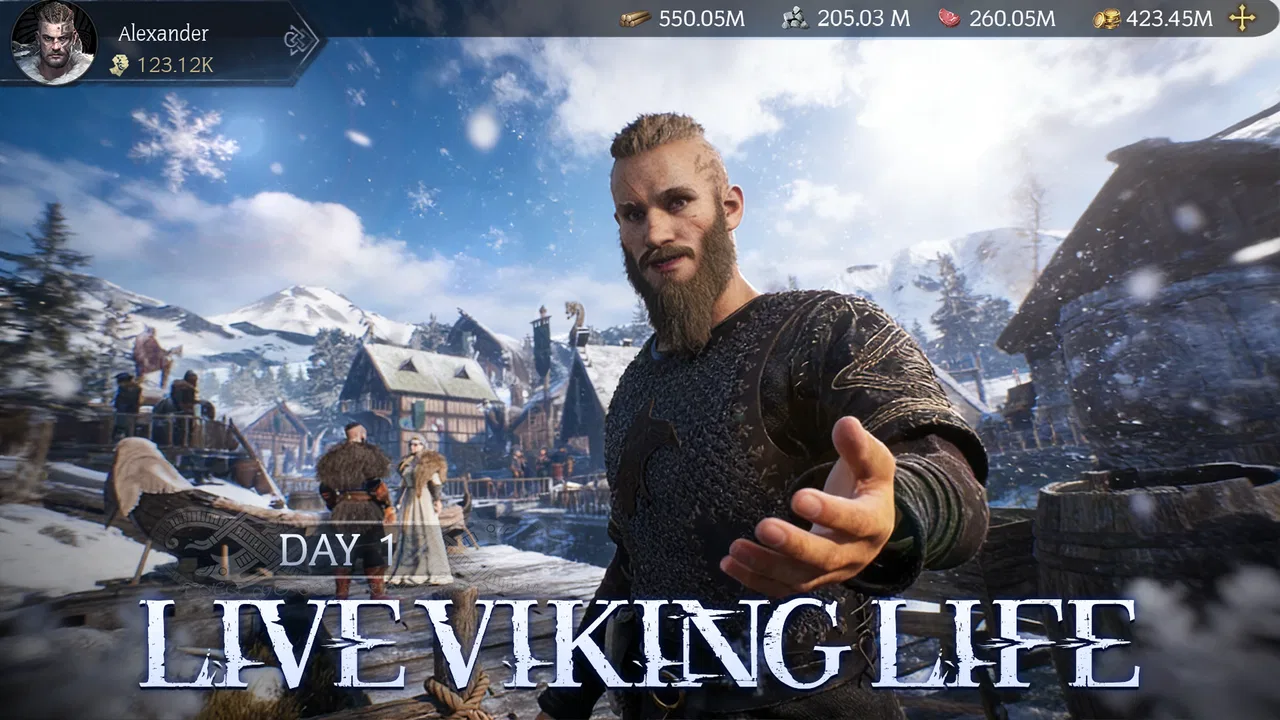
I spent time with Vikingard as a mobile role-playing game built around Viking identity, fleet building, and a journey through Norse mythology. Its strongest quality is that it gives me a clear sense of direction almost immediately: I am not simply tapping through disconnected battles, but working toward a larger idea of becoming a stronger Viking leader. That framing makes the early minutes easy to understand, even when the number of menus and upgrade choices begins to grow.
Vikingard is free to download, developed by Orienjoy International Company Limited, and aimed at a Teen audience. It has reached over five million installs and holds a 3.9 average from roughly sixty-nine thousand ratings, which suggests a substantial player base but also a noticeably mixed experience. I can understand that split. The game is accessible and visually inviting, yet its long-term rhythm asks for patience, regular attention, and comfort with optional spending.
How the early goals pull you into the journey
The opening works because it gives me several goals at once without making them feel completely unrelated. Building a Viking fleet creates a broad objective, while the role-playing structure turns that objective into smaller steps involving growth, preparation, and discovery. I always have something nearby to work toward, whether that means improving the current state of my group or pushing toward the next piece of the wider Norse adventure.
You May Also Like

 Blood Strike: 2.5 Anniversary
Blood Strike’s Loadouts Turn Every Drop Into a Tactical Gamble
A close look at Blood Strike’s custom loadouts: how fast access to signature weapons reshapes its battle royale rhythm, rewards preparation, and narrows the gap between fights.

 Pandora - Music & Podcasts
Pandora’s Music Is Easy to Start, but Harder to Recover
Pandora’s strength is its low-effort path from a seed to a station. Its weak spot is how much confidence it asks you to place in connection, setup, and quiet recovery.

 8 Ball Pool
 Is Built on Rivalries, Rematches, and Routine
A close look at the rivalries, rematches, shared routines, and unanswered safety questions that turn a quick pool match into a persistent mobile community.

 Samsung Music
’s Quiet Strength Is Playing What You Already Own
Its reach comes less from spectacle than from dependable access to a personal library. That simplicity is both the app’s strongest retention engine and its ceiling.

 AccuWeather: Weather Radar
AccuWeather Review: A Quick, Clear Forecast for Everyday Decisions
For everyday plans, the best forecast is the one you can understand quickly. AccuWeather makes rain timing, radar, and local conditions easy to act on, with a few trade-offs.

 Hill Climb Racing
Why Hill Climb Racing Still Turns Crashes Into One More Run
A tiny car, a bumpy hill and one more upgrade: Hill Climb Racing keeps resurfacing because its simple chaos makes every near-miss feel personal.
More From Our News Desk
View All News


That layered goal structure is more effective than a single campaign marker. If I only cared about reaching the next story point, a slower session could feel empty. Here, the surrounding progression gives short play sessions a purpose. Even when I do not make dramatic progress, I can usually identify a smaller improvement worth completing before closing the game.
The fleet theme also helps distinguish Vikingard from role-playing games that focus entirely on one hero. I am encouraged to think in terms of a growing force rather than a lone character, and that changes how I judge progress. A new improvement feels useful not only because it makes one unit stronger, but because it contributes to the feeling that my settlement and expedition are gradually becoming more capable.
For a new player, my advice is to resist the temptation to spend every available resource as soon as it appears. Early rewards can create the impression that every upgrade is equally urgent, but a more deliberate approach makes the later choices easier. I found it more useful to decide which part of my current progression was blocking me, then direct resources there instead of spreading them across every visible option.
That is one of the first important trade-offs. Vikingard is generous enough in the opening to keep momentum moving, but that momentum can disguise the fact that the game is teaching a longer routine. The early phase feels brisk; the later experience depends much more on how carefully I manage attention and resources.
Small victories matter more than dramatic leaps
The game communicates progress through a series of modest improvements. I notice that I am stronger because a previously awkward objective becomes manageable, because my fleet feels better prepared, or because the next stage no longer looks quite as distant. These signals are not as spectacular as a major role-playing game level-up, but they suit the mobile format well.
I particularly appreciate this when I have only a few minutes. A short visit can still feel worthwhile if I finish a task, collect an improvement, or prepare the next step. That makes the game easier to fit around an ordinary day than a role-playing title that expects a long uninterrupted session before anything meaningful happens.
At the same time, the number of small goals can make the experience feel busy rather than deep. When several systems compete for my attention, I sometimes find myself following the next highlighted action without thinking much about why it matters. Players who enjoy optimizing a broad progression path may find that satisfying; players who prefer a tightly authored adventure may see it as distraction.
The best way I found to keep control was to use a simple priority order. I first looked for the activity that unlocked or enabled the most other progress, then considered direct strength improvements, and left cosmetic or less urgent upgrades for later. This approach is not flashy, but it prevents the common mobile-game problem of spending everything on the first attractive option and then feeling stalled when a more important requirement appears.
Another useful habit is to treat the fleet as a long-term project rather than judging it after every individual encounter. Some upgrades may not feel transformative immediately. Their value becomes clearer when several improvements work together and let me approach content with less hesitation. That delayed payoff is easy to miss if I expect every purchase or reward to produce an instant change.
The difficulty curve rewards preparation, not rushing
Vikingard begins in a welcoming way, but its challenge gradually becomes more noticeable as the initial flow settles. The game does not remain a constant stream of effortless victories. Eventually, I have to pay more attention to how I use resources and whether my current development is keeping pace with the demands ahead.
I like that the difficulty is connected to progression rather than appearing as random punishment. When I struggled, the answer was usually to improve my preparation or reconsider where I was investing effort, not simply to repeat the same action without change. That creates a basic strategic layer beneath the mythological presentation.
Still, the challenge curve is not perfectly smooth from a player’s point of view. The early experience can make progress feel almost automatic, so a later slowdown may seem sharper than it really is. Someone who plays quickly through the opening may reach a point where the game suddenly feels less generous. I recommend slowing down before that happens and learning which upgrades genuinely support the next objective.
This is also where Vikingard differs from a traditional single-player role-playing game. In a more conventional adventure, I might expect exploration, direct control, and a carefully paced sequence of encounters. Here, the satisfaction comes more from managing a developing Viking operation and watching the wider structure grow. If you want fast, skill-based action, this will probably feel too indirect. If you enjoy planning gradual improvement, the slower approach is more appealing.
The Norse setting gives those slower decisions a useful identity. Fleet growth and Viking advancement feel more natural in this context than they would in a generic fantasy menu. The mythology is not merely decoration in my experience; it gives the progression a recognizable mood and helps the game avoid feeling like an anonymous collection of upgrade screens.
One practical tip is to avoid measuring success only by the hardest available challenge. When the game presents a demanding target, I found it more productive to use that target as a checklist. If the fleet is underdeveloped, strengthen the weakest area first. If resources are tight, pause before committing them. If the next step feels unclear, complete the smaller objectives that improve readiness rather than forcing a difficult attempt.
That method makes the difficulty feel less like a wall and more like a signal. It also reduces wasted sessions. Repeating an encounter without changing preparation rarely feels rewarding, while returning after a focused improvement gives the next attempt a clear purpose.
Where the pacing begins to ask for commitment
The main pacing question is not whether Vikingard has enough to do. It is whether the player enjoys returning to the same broad cycle of improvement, collection, preparation, and further advancement. I found the loop comfortable when I wanted a steady mobile routine, but less compelling when I was looking for a compact story with a definite endpoint.
There is a noticeable difference between active engagement and maintenance-style play. During a focused session, I can make decisions and pursue a goal. During a shorter visit, the attraction may be checking progress and handling whatever is ready. That flexibility is useful, but it can also make the game feel less substantial if I am not personally invested in the long-term Viking project.
The Teen content rating is worth keeping in mind for families, although the rating alone does not tell me whether the game will suit every younger player. The more important question is whether the player can handle a progression system that includes optional purchases and a pace that may encourage regular returns. Parents should look at the in-app purchase range, which runs from ninety-nine cents to ninety-nine dollars and ninety-nine cents per item, and decide whether device-level purchase controls are appropriate.
I did not find the free entry point difficult to understand, but free does not mean frictionless. Optional spending can change how quickly someone moves through the progression, and that creates a different experience for players who pay and players who prefer to wait. My advice is to decide early whether you are treating the game as a no-cost pastime or as a hobby with a spending limit. Making that choice in advance helps prevent impulsive purchases when progress slows.
This is one of the clearest retention pressures in the design. The game’s goals are arranged so that there is usually another improvement to consider, and the sense of an unfinished fleet can make returning feel natural. That can be motivating when I want a persistent project. It can become tiring when the game starts to feel like another obligation on my phone.
I would skip Vikingard if I know I dislike waiting for gradual progress, managing several layers of development, or seeing optional purchases alongside a free role-playing experience. I would also choose a more traditional RPG if my priority is direct combat and a tightly controlled narrative. The game is a better match for someone who enjoys checking in, making incremental decisions, and watching a themed collection of improvements build over time.
What keeps the long-term progression interesting
The long-term appeal comes from the combination of goals rather than from one isolated feature. Fleet development gives me a strategic reason to continue, the role-playing framework gives individual improvements context, and Norse mythology supplies a consistent atmosphere. Together, these elements make the progression feel more personal than a plain numerical ladder.
One subtle strength is that the game gives me multiple ways to define a successful session. I can aim for immediate advancement, prepare for a harder challenge, or simply improve the overall state of my Viking group. That flexibility matters on mobile because my available time changes from day to day. A game that only feels rewarding during long sessions would be harder to maintain.
There is also a useful distinction between visible progress and meaningful progress. A new reward may look impressive, but the more valuable question is whether it improves my ability to handle the next obstacle. I recommend judging upgrades by that practical effect. If an improvement does not help current progress, I would save resources rather than buying it simply because it is available.
For an everyday scenario, imagine opening the game during a commute or a lunch break. I would not try to solve the entire progression at once. I would choose one concrete objective, review the resources connected to it, complete the most efficient available step, and stop once that goal was handled. This keeps a short session focused and prevents the menu-heavy structure from turning a few spare minutes into aimless tapping.
For a longer evening session, I would do the opposite: review the broader state of the fleet, identify the next meaningful threshold, and plan several upgrades around it. The game becomes more satisfying when I approach it with a plan instead of responding to every notification or newly available button.
The current version is 3.3.52.e74acbdf, and the game supports devices running Android 7.0 or later. That makes it accessible to many Android players, though actual comfort will still depend on the device and the player’s tolerance for a busy progression interface. I would check the operating-system requirement before installing on an older phone, then allow enough storage and patience for the game’s layered structure rather than expecting a minimalist experience.
Its audience size is encouraging if you value an established community around a mobile game. The roughly two thousand written reviews add context to the average rating: players are clearly engaging enough to leave detailed reactions, but the middling overall score also tells me that Vikingard will not satisfy everyone. I read that as a reason to approach it with the right expectations, not as an automatic warning.
My verdict on goals, challenge, and retention
Vikingard succeeds best when I treat it as a persistent Viking management journey with role-playing elements, not as a conventional action RPG. Its early goals are clear, its progress signals are frequent enough to maintain momentum, and its difficulty eventually encourages preparation rather than blind repetition. The Norse setting gives the whole routine a stronger identity than many similarly structured mobile games.
Its weaknesses are closely tied to those strengths. The steady stream of goals can become maintenance, the later pace may feel slower than the opening suggests, and optional purchases create pressure for players who want faster progress. The game also asks me to enjoy indirect advancement; anyone seeking precise combat control or a concise campaign should look elsewhere.
I would recommend it to a player who likes free role-playing games with a long progression arc, a fleet-building theme, and enough small objectives to make short visits worthwhile. I would especially recommend setting a spending boundary and choosing upgrade priorities before the game’s momentum takes over. That turns the experience from reactive tapping into a more satisfying personal project.
After weighing the pacing and the pressure to keep returning, I see Vikingard as a solid but selective recommendation. It is not the right mobile RPG for every mood, yet it has a coherent identity and a useful sense of forward movement. If the idea of gradually shaping a Viking fleet and exploring a Norse-inspired world sounds more appealing than chasing immediate action, I think it is worth trying for free. Just approach it as a patient long-term game, because its best rewards come from steady planning rather than rushing.
FAQs for Vikingard
01What is Vikingard, and what kind of game is it?
Vikingard is a strategy and role-playing game centered on Viking life, exploration, clan development, and battles. You manage resources, expand your settlement, recruit and improve heroes, and take part in story-driven activities and competitive events. It combines base management with character progression, so it is better suited to players who enjoy long-term development rather than short, one-minute action matches.
02Can I play Vikingard without spending real money?
Yes, Vikingard can be played without making purchases. The game provides regular rewards, quests, events, and progression systems that allow free players to develop their settlement and characters. However, optional in-app purchases can speed up upgrades, provide additional resources, or offer premium items. Progress may feel slower later in the game, particularly when competing with highly active or paying players in rankings and timed events.
03Does Vikingard require an internet connection?
Vikingard is primarily an online game and normally requires an active internet connection. Your progress, events, social features, battles, rewards, and account data are connected to the game’s servers. Because of this, it is not a reliable choice for completely offline play. A stable Wi-Fi or mobile data connection is recommended, especially during competitive activities or when loading new story and event content.
04Is Vikingard suitable for children?
Vikingard uses a Viking-themed setting with battles, competition, character development, and social or clan-related features. While it is not presented as a realistic combat simulator, parents should still review the game’s age rating, chat options, advertising, and in-app purchase settings before allowing younger players to use it. The strategic systems and frequent events may also encourage regular play, so parental controls can be helpful.
05What should new players know before starting Vikingard?
New players should expect a game built around steady progression rather than immediate completion. It is important to follow the early quests, improve the main settlement, use resources carefully, and avoid spending premium currency too quickly. Joining an active clan can provide useful rewards and social benefits. Because the game includes multiple heroes, upgrades, events, and daily activities, consistent logins usually make progress much easier.
Pros
- Engaging Viking-themed strategy with a strong sense of progression.
- Large roster of heroes adds variety to team-building and combat.
- City development provides meaningful goals beyond battles.
- Regular events offer extra rewards and new challenges.
- Playable without constant internet access in some modes.
Cons
- Progress can become heavily dependent on timers and resource management.
- Competitive features may favor players who spend money regularly.
- The interface can feel crowded for new players at first.
- Upgrading many heroes and buildings requires significant grinding.
- Story and event content may become repetitive over time.

Vikingard
Gallery